
16 Jan Meet the Resident Dolphins of Murrells Inlet — How Captains Recognize Individual Dolphins
One of the most magical moments on a Blue Wave Adventures tour is meeting the local dolphin pods that call Murrells Inlet home. When guests spot a dolphin for the first time, it’s often pure wonder — a graceful curve of gray against calm coastal water. But for the captains and marine naturalists who work these waters year-round, every dolphin has a name, a history, and a story written right on its body.
Understanding how to identify individual dolphins helps scientists, guides, and visitors form deeper connections to these intelligent marine mammals. It also supports conservation by tracking population health, movement, and behavior over time.
The Art and Science of Dolphin Identification
Unlike humans, dolphins don’t have fingerprints — but they do have dorsal fins, and each one is unique. The dorsal fin, that tall curved fin on a dolphin’s back, develops distinct nicks, notches, and scars over the years. These natural marks, shaped by genetics, time, and sometimes playful encounters, make each dolphin instantly recognizable once you know what to look for.
Blue Wave Adventures captains have spent years learning to recognize these small differences. Some dolphins have perfectly smooth fins; others have distinctive patterns, like a small triangular cut on one side or a ragged trailing edge. Photographs taken during tours help researchers maintain photo-identification catalogs, where images are compared across years to track individual animals.
For example, a dolphin seen in the inlet in 2018 might show up again in 2026 — same markings, same home range — which tells biologists important things about site fidelity and population stability.
The Residents of Murrells Inlet
Murrells Inlet’s dolphins belong to a community known as a resident population. These animals live year-round near the coast, unlike migratory groups that travel long distances with the seasons. Resident dolphins raise young here, hunt in the same channels, and even form long-term social bonds within their pods.
When guests join a Blue Wave Adventures dolphin tour, there’s a good chance you’ll see some of these familiar fins. Over the years, local captains have developed affectionate nicknames for certain dolphins frequently spotted near jetties or feeding at the marsh edges. Each returning sighting feels like recognizing an old friend.
A Day in the Life of a Murrells Inlet Dolphin
Winter or summer, dolphins spend most of their time either foraging, socializing, or resting. You might see them cooperatively hunting fish by circling schools or driving them into shallower water — a strategy that shows just how intelligent and coordinated they are. They use complex communication, including whistles and clicks, to coordinate movements and maintain pod connections.
Sometimes, guests even hear their breaths before seeing them, a powerful reminder of how alive and present they are in this ecosystem.
What a Responsible Wild Encounter Looks Like
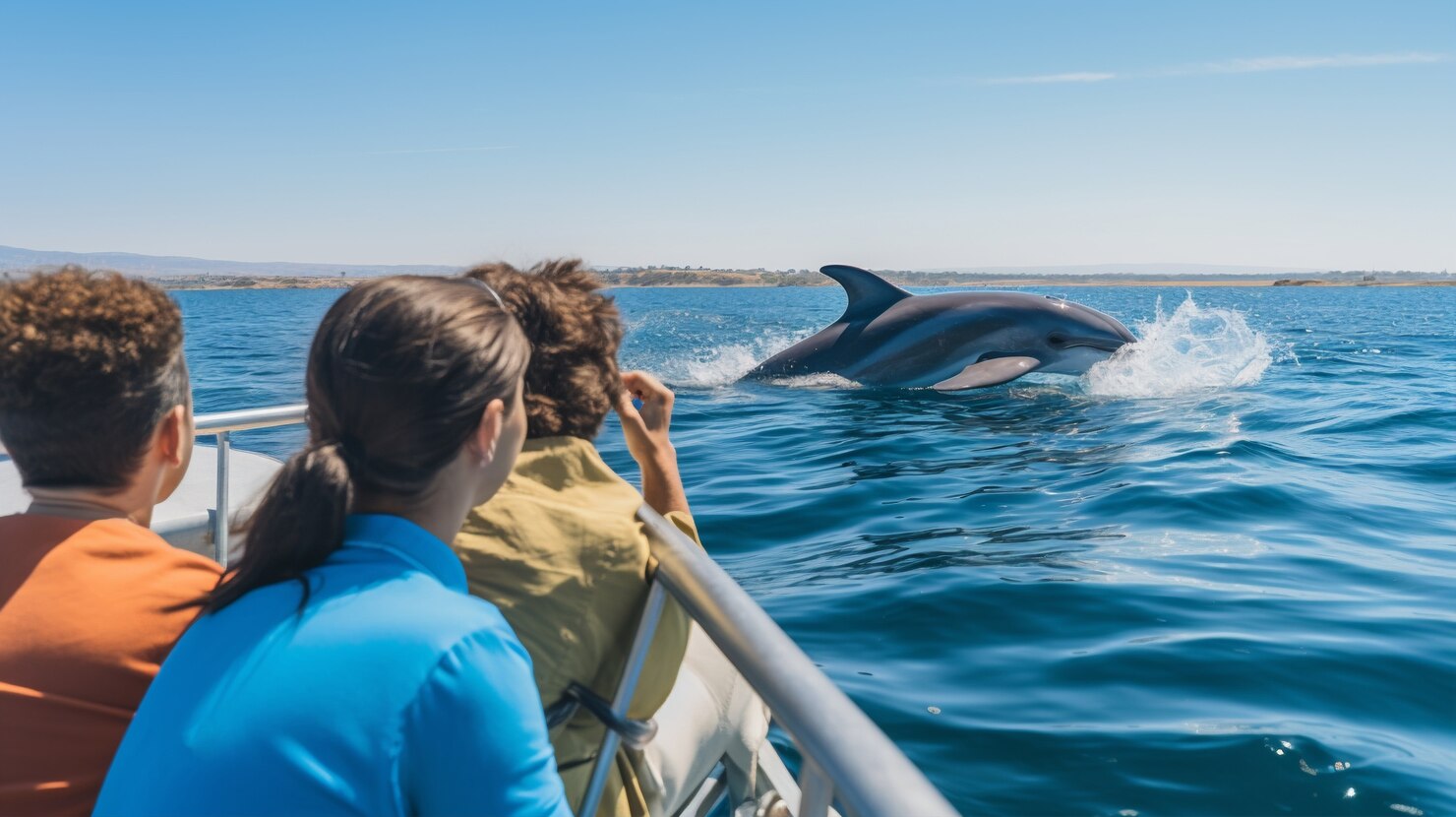
One of the best things about Blue Wave Adventures tours is their emphasis on ethical wildlife viewing. The captains follow federal Marine Mammal Protection Act guidelines, keeping respectful distances and never pursuing or feeding dolphins. Instead, tours allow dolphins to choose the encounter.
When a dolphin approaches the boat, it does so out of curiosity. That natural interaction — free from pressure or stress — provides guests with an authentic window into dolphin behavior while keeping wildlife safe and undisturbed.
Responsible dolphin watching also helps reduce the risks that come with human interaction, such as dependence on handouts or altered feeding patterns. These principles make Murrells Inlet one of the best examples of tourism that coexists sustainably with marine life.
Why It Matters
Individual dolphin identification isn’t just a fun skill for captains — it’s a core part of marine research and conservation. By recognizing the same individuals over years, researchers can measure changes in health, calf survival, or environmental stressors. Sometimes, these long-term records even help identify when a new dolphin joins the local pod or when migration patterns shift with climate changes.
Guests who photograph dolphins during tours can help, too. Submitting clear dorsal fin photos to local research teams makes citizen science possible — bridging the gap between everyday ecotourism and academic study.
The Blue Wave Commitment
Every Blue Wave Adventures outing is guided by respect for the sea, education, and authenticity. Captains use storytelling and ecological context to help passengers understand not just what they’re seeing, but why it matters.
By the time a tour returns to the dock, most guests leave with more than photos — they leave with appreciation for wild dolphins as individuals, not just silhouettes against the water.
Key Takeaways
- Bottlenose dolphins can be identified by their unique dorsal fin markings.
- Murrells Inlet hosts a stable, year-round resident dolphin community.
- Photo-identification supports long-term conservation and research.
- Ethical viewing ensures safe and natural wildlife encounters.
- Blue Wave Adventures blends marine science with education and respect.
Sorry, the comment form is closed at this time.