
04 May Murrells Inlet Tidal Patterns Explained: How the Tides Shape Wildlife Sightings on Every Tour
Ask Captain Mark what the single most important factor is in predicting what guests will see on a given tour, and his answer will surprise you. It isn’t the season. It isn’t the weather. It isn’t even how many dolphins happen to be in the inlet that week.
It’s the tide.
The tidal cycle governs nearly everything that happens in the salt marsh ecosystem of Murrells Inlet — where fish school, where dolphins feed, where birds congregate, where crabs surface, and where the energy of the entire system concentrates at any given moment. Understanding how tides work in Murrells Inlet isn’t just an interesting science lesson — it’s the master key to understanding why this waterway is one of the most wildlife-rich places on the entire Atlantic coast.
What Drives the Tides in Murrells Inlet?
Murrells Inlet experiences semidiurnal tides — meaning the inlet sees approximately two high tides and two low tides every 24 hours, each separated by roughly six hours. This pattern is driven by the gravitational pull of the moon (and to a lesser extent, the sun) on the Earth’s oceans.
Along the South Carolina coast, the tidal range — the vertical difference between high and low tide — typically runs between 4 and 6 feet, depending on the lunar phase. During a spring tide (which occurs at both the new moon and full moon, not just in the spring season), the tidal range is at its maximum, and the resulting water movement through the inlet is dramatically more powerful. During a neap tide (near the first and third quarter moon), the range is smaller and the water movement more modest.
This six-hour rhythm — high water, falling tide, low water, rising tide, repeat — is the heartbeat of Murrells Inlet, and every creature that lives here has evolved to work with it, not against it.
The Four Tidal Stages and What They Mean for Wildlife
Understanding the four stages of the tidal cycle transforms a boat tour from a pleasant cruise into a genuine wildlife experience. Here’s what each stage brings to the table.
Stage 1: High Tide — The Flood
At high tide, the waters of Murrells Inlet push deep into the salt marsh, filling the tidal creeks to their banks and covering the mudflats that will be exposed hours later. Fish spread out across the inundated marsh grass, foraging widely in water that is now too shallow for larger predators to easily follow. Wading birds like great blue herons and snowy egrets retreat to higher perches.
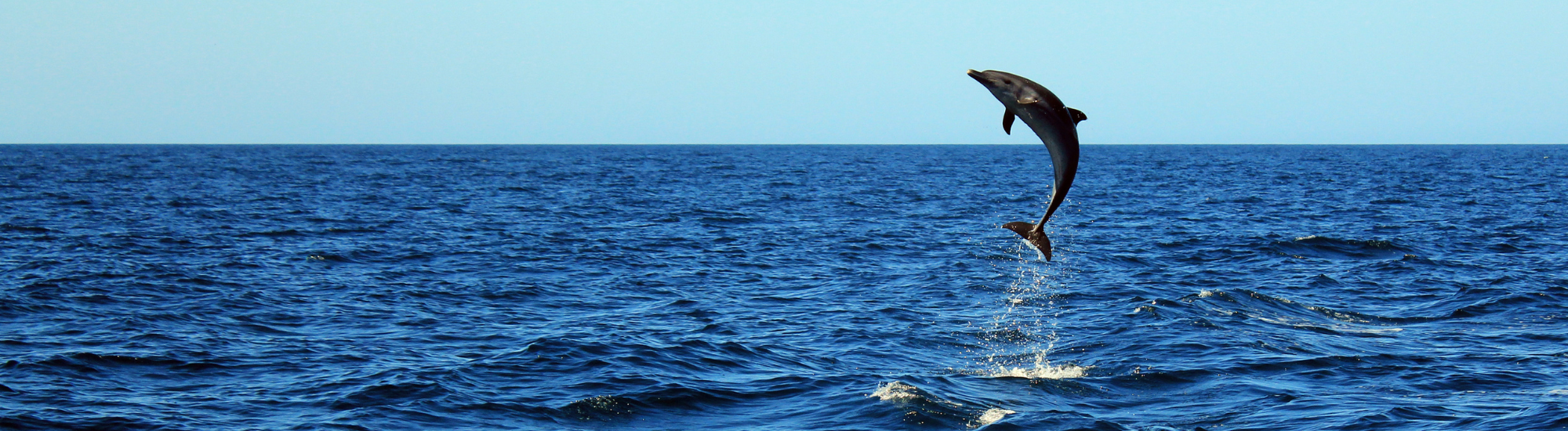
From a dolphin-watching standpoint, high tide is often the most challenging time to locate feeding pods, because the fish are dispersed and there is no natural bottleneck concentrating prey. However, high tide does offer other rewards:
- Kayakers and paddleboarders can access the innermost marsh creeks, which are too shallow to navigate at low water
- The visual landscape of the marsh is at its most dramatic and mirror-like
- Dolphins may be visible in open water, traveling between foraging areas, and are sometimes more visible at the surface in flat, glassy conditions
- Bottlenose dolphins are frequently observed socializing — traveling in larger pods, engaging in surface play, and occasionally following the boat — during high tide slack water
The brief period of stillness at the peak of high tide — called high slack — is a moment of pause in the system before the direction of flow reverses.
Stage 2: The Falling (Ebb) Tide — The Prime Window
As the tide begins to fall, the character of the entire inlet changes. Water drains out of the marsh grass and tidal creeks in a steady, powerful flow, and as it does, it funnels the fish and invertebrates that were spread across the marsh into an increasingly narrow channel.
This concentration effect is everything. Fish that were scattered across acres of marsh grass twenty minutes ago are now channeled into the mouth of a tidal creek, stacked against a mudflat bank, or pushed toward the main channel of the inlet. Predators — dolphins, pelicans, egrets, ospreys — all respond to this concentration with immediate, intense feeding activity.
The ebb tide is, without question, the most productive period for dolphin watching in Murrells Inlet. Captain Mark plans his tours to align with ebb tide conditions whenever possible, because the feeding behavior during a falling tide is simply unmatched in frequency and intensity.
During the ebb tide, you are most likely to witness:
- Active dolphin feeding along the margins of tidal creek mouths
- Strand feeding behavior on the exposed mudflat banks
- Cooperative pod hunting, with multiple dolphins working together
- Concentrated multispecies feeding activity including pelicans, terns, and herons all working the same location as the dolphins
The middle of the ebb — roughly two to three hours after high water — typically represents peak feeding intensity, when the drainage is strongest and the fish concentration is highest.
Stage 3: Low Tide — Exposed and Revealed
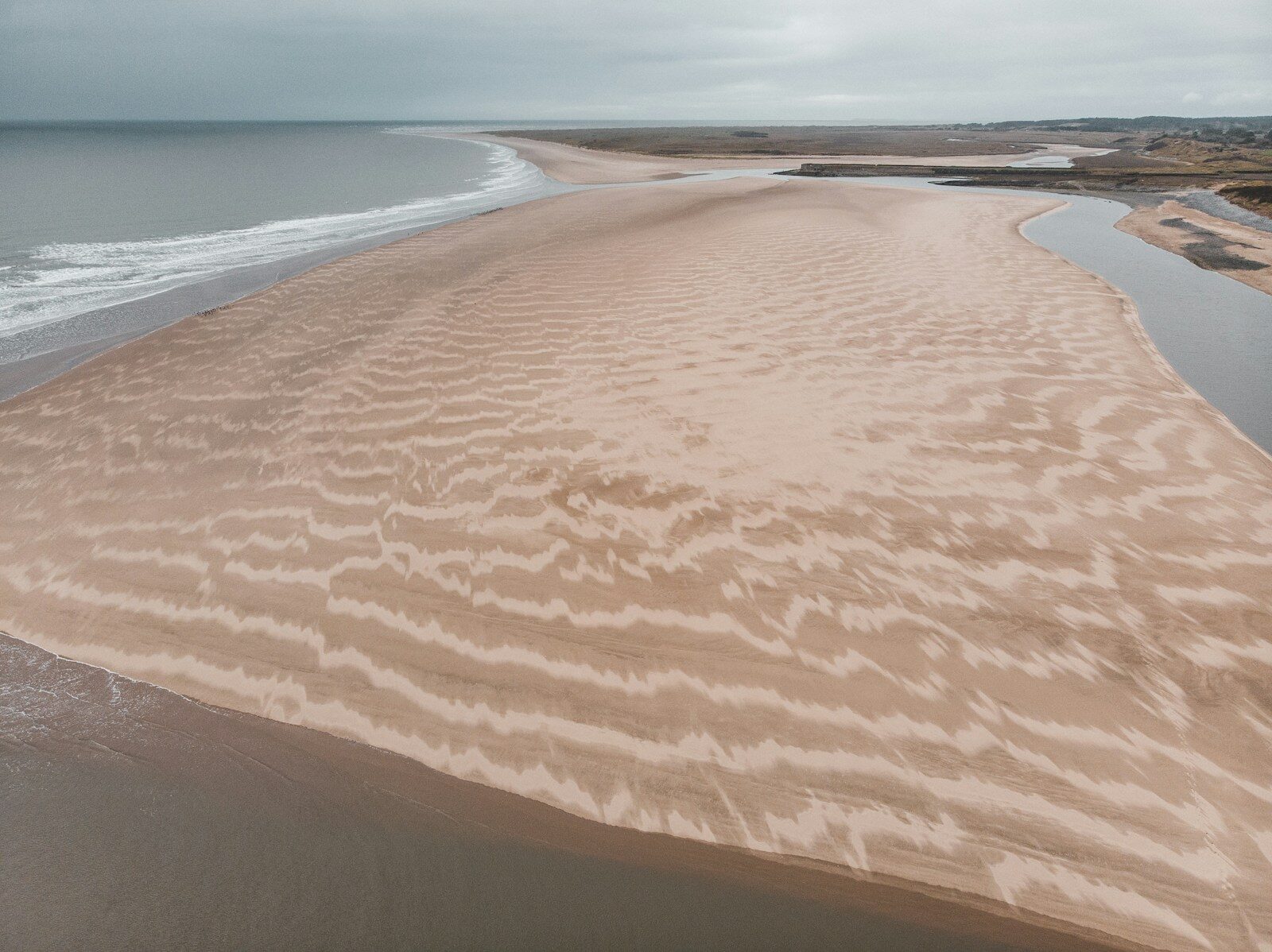
Low tide in Murrells Inlet reveals a landscape that is entirely invisible at high water: broad mudflats, oyster beds, sandbars, and the exposed roots of cordgrass that define the character of the salt marsh. The amount of habitat revealed at low tide is extraordinary — in some parts of the inlet, the low-water footprint of the mudflats covers several acres.
For wildlife viewing, low tide has its own distinct character. Wading birds that were largely absent during high tide now appear in numbers, working the edge of the water and the exposed mudflats for fiddler crabs, small fish, and invertebrates. Great blue herons, tricolored herons, snowy egrets, reddish egrets, and willets are all commonly observed at low tide in Murrells Inlet.
Bottlenose dolphins often patrol the deeper channels at low tide, taking advantage of the concentrated fish that have been pushed out of the shallows entirely. At very low tides — especially during spring tides — dolphins can be observed in the main channel in unusually close proximity to the banks, because the shallower water limits their options for depth.
Oyster reefs and shell rakes that are completely submerged at high tide become exposed features of the landscape at low tide, revealing one of the most ecologically productive habitats in the coastal ecosystem. A single oyster reef in Murrells Inlet can filter millions of gallons of water per day, and the dense invertebrate communities living within these reefs support the entire food chain above them.
Stage 4: The Rising (Flood) Tide — The Reset
As the tide turns and begins to rise again, a second but less intense feeding surge sometimes occurs, particularly in the early portion of the flood when baitfish are making their way back into the marsh. Dolphins may be observed at creek mouths and channel edges during the first hour of incoming tide, though this feeding activity is generally less concentrated than what occurs during the ebb.
As the rising tide continues, fish begin to disperse back into the marsh, and the feeding frenzy gradually dissipates. The system resets itself for the next cycle, and the inlet moves back toward high slack — and the whole extraordinary process begins again.
How Tidal Stage Interacts with the Time of Day
Because Murrells Inlet’s tidal cycle shifts by approximately 50 minutes each day, the best wildlife viewing conditions rotate through the clock over the course of the month. Some days, the prime ebb tide window falls perfectly in the morning. Other days, it aligns with the late afternoon. Understanding this dynamic helps explain why Captain Mark pays such close attention to the tide chart when planning each day’s tours.
It also explains something guests occasionally wonder about: why two tours departing at the same time on different days can feel remarkably different in terms of wildlife activity. The tours are identical in route, boat, and captain — but the tidal stage is completely different, and that changes everything about where the fish and dolphins are concentrated.
Spring Tides vs. Neap Tides: The Monthly Amplifier
Overlaid on the daily tidal cycle is the monthly lunar pattern, which amplifies or moderates the tidal range and the intensity of the feeding opportunities it creates.
Spring tides (near new and full moon) produce the largest tidal ranges — sometimes approaching 6 feet of vertical change in Murrells Inlet. The water movement during spring tide ebb is dramatically more powerful, and the fish concentration effect is correspondingly more intense. Spring tide ebb conditions are, in Captain Mark’s experience, the single most reliable predictor of high-intensity dolphin feeding activity. If your visit happens to coincide with a full or new moon and a morning or afternoon ebb tide, you may be about to have one of the most memorable wildlife experiences of your life.
Neap tides (near the quarter moons) produce the smallest tidal ranges. The water movement is gentler, the concentration effect is more modest, and feeding activity tends to be more subdued. Neap tide tours are still wonderful — there are always dolphins in Murrells Inlet — but the feeding intensity that makes the most dramatic encounters is less likely.
How the Ecosystem Responds to Each Tidal Stage: A Wildlife Guide
Here is a quick reference for what to look and listen for at each stage of the tidal cycle on a Blue Wave Adventures tour:
High tide / high slack:
- Dolphins traveling and socializing in open water
- Marsh grass fully inundated and visually dramatic
- Brown pelicans resting on channel markers and docks
- Osprey perched in trees, scanning from a height advantage
- Bottlenose dolphins may be harder to locate but are often more relaxed and interactive
Ebb tide (falling water):
- Active dolphin feeding at tidal creek mouths — this is the prime window
- Strand feeding possible on exposed mudflat banks
- Pelicans diving repeatedly in active feeding areas
- Herons and egrets appearing along the banks
- Mullet and other baitfish visibly leaping ahead of feeding dolphins
Low tide / low slack:
- Oyster reefs, shell rakes, and mudflats fully exposed
- Wading birds in high numbers along the marsh edge
- Fiddler crab activity visible on exposed mudflats
- Dolphins concentrated in deeper main channel
- Raccoons and other marsh-edge wildlife sometimes visible foraging on exposed habitat
Flood tide (rising water):
- Secondary dolphin feeding surge possible in the first hour
- Fish beginning to move back into the marsh
- Birds transitioning from the exposed flats back to elevated perches
- Water clarity often at its best on incoming tides, especially in spring
What This Means When You Book Your Tour
At Blue Wave Adventures, Captain Mark monitors tidal charts daily and organizes tour departures to maximize the chance of witnessing peak wildlife activity. When you book a morning or afternoon tour, you’re not just choosing a departure time — you’re choosing a tidal window, and we make sure every departure is timed to put you on the water during conditions that give wildlife the best opportunity to show off.
We always recommend being flexible when possible. If you have a choice between two different dates and one aligns with a spring tide ebb while the other falls on a neap high tide, the difference in your experience could be significant. When you call to book, ask us about the tidal forecast — we’re always happy to talk through what conditions will be like during your visit.
The Bigger Picture: Why Tides Make Murrells Inlet Special
The tidal salt marsh ecosystem of Murrells Inlet is productive precisely because of the twice-daily exchange of water, nutrients, and organisms that the tide drives. That relentless pulse — high and low, fill and drain, concentrate and disperse — is what makes this estuary one of the most biologically rich habitats on the East Coast.
The dolphins that live here year-round have evolved their behavior around this pulse. The birds have timed their foraging to the ebb. The fish run the incoming tide and hide in the grass at high water. Every creature in this system is reading the same clock — the tidal clock — and doing exactly what it was born and taught to do in response.
When you’re on the water with us, you’re not just watching dolphins. You’re watching the entire system operate — a four-billion-year-old planetary mechanism moving water across the face of the Earth, and every living thing in Murrells Inlet riding that wave in its own extraordinary way.
Frequently Asked Questions About Tides and Wildlife Viewing
How do I know what the tide will be doing on the day of my tour? NOAA maintains free, highly accurate tidal prediction data for Murrells Inlet at tidesandcurrents.noaa.gov. You can look up the predicted high and low times for any date. When you book with Blue Wave Adventures, we’re always happy to discuss what tidal conditions will be like during your visit.
Does bad weather affect the tidal pattern? The astronomical tide (driven by the moon and sun) is highly predictable and is not significantly affected by weather. However, strong onshore winds and storm surge can temporarily raise water levels above the predicted tide height, and prolonged offshore winds can lower them. These conditions are called “meteorological tides” and can occasionally alter the timing and character of the tidal cycle. Captain Mark monitors both the tide chart and the weather forecast before every departure.
Is there one single “best” tidal condition for a dolphin tour? If we had to pick one, it would be a spring tide ebb — the two to three hours following high water during a new or full moon. The combination of maximum tidal range and strong fish-concentrating drainage produces the most intense and predictable dolphin feeding activity we see all year. But the reality is that dolphins are present and active throughout the tidal cycle, and every departure has its own rewards. We’ve never had a tour where the dolphins didn’t show up.
Do tidal patterns change by season? The timing and character of tides shift seasonally primarily because of the seasonal change in the sun’s gravitational contribution to tidal forcing, but the basic pattern of two highs and two lows per day remains constant year-round. What changes significantly by season is what the fish are doing — the species present, their abundance, and their behavior in response to water temperature and seasonal migration patterns — and that interacts with the tidal cycle to create very different wildlife experiences at different times of year.
Experience the Tides of Murrells Inlet for Yourself
There’s something deeply satisfying about understanding the system you’re observing — about watching a dolphin surge up a mudflat bank at the exact moment the ebb tide has concentrated a school of mullet there, and knowing why it’s happening in that place at that moment. It transforms a wildlife sighting from something random and lucky into something you can read, anticipate, and fully appreciate.
That’s what Captain Mark brings to every Blue Wave Adventures tour: twenty-two years of reading the tides, the fish, and the animals of Murrells Inlet, and sharing everything he knows with the people lucky enough to be on board.
Questions about what you’ll see?
Blue Wave Adventures is based in Murrells Inlet, South Carolina — one of the most productive estuaries on the Atlantic seaboard and home to a year-round population of resident bottlenose dolphins. Our tours depart from Murrells Inlet and explore the tidal creeks, salt marshes, and open coastal waters of the Grand Strand.
Sorry, the comment form is closed at this time.